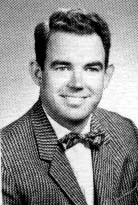
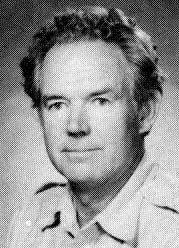
SEQ's
Founder
and
1st Advisor
Art Cooley
In the fall of 1970, Mr. Art Cooley, a biology teacher, assisted in
the start of Students for Environmental Quality (“SEQ”) when a group of
his Bellport High School (“BHS”) students persuaded him to be their club
advisor. Apparently it did not take too much persuasion, as Cooley was
already well established in local environmental circles. In 1965, he had
helped organize a group of people concerned with the destruction of salt
marsh wetlands in Suffolk County. This group named itself the
Brookhaven Town Natural Resources Committee. Soon after, in 1967, he
co-founded the Environmental Defense Fund with Dennis Puleston. The
founding of SEQ in 1970, therefore, seemed a natural extension of his
interests.
According to Cooley, “Students for Environmental Quality was
organized because students craved an organization that would pursue an
issue they were most interested in, specifically the pollution of Swan Lake
with used oil from a local car dealership. They felt that this organization
would give them more legitimacy than just a single person. In time, it
served as the vehicle for students to investigate other issues, learn about
them, and plot a course of action. Eventually students learned how to
write, how to present testimony at hearings, how to lobby in Albany and,
in the process, learned how democracy and advocacy works in our country.
It was an invaluable lesson.”
In the foreword to the Second Edition of The Carmans River Story
(first published by SEQ members, Pamela Borg and Elizabeth Shreeve in
1974), Cooley quoted Frenchman, Alexis de Tocqueville, who, when
researching his 1859 book on Democracy in America, said, “As soon as several
Americans have conceived a sentiment or an idea that they want to
produce before the world they seek each other out and, when found, they
unite. Thenceforth they no longer isolate individuals but a power conspicuous
from the distance whose action serve as an example; when it speaks,
men listen.”
Continuing this thought, Cooley related that “in one sense the
idea of coming together is as old as human culture; in another sense, few
students had realized the strength of this idea. The environmental movement
of the mid twentieth-century activated many, mostly college students.
SEQ was one of four high school organizations of its kind.”
Cooley proudly recalled SEQ accomplishments, including a number
of environmental firsts: “Over the years they played a major role in
passage of five pieces of legislation – four New York State laws and one
Suffolk County law. Two State laws helped protect the Carman’s River and
its watershed. Two [laws], one County and one State, established a deposit
law – first in Suffolk County and then in New York State. The fifth law
protected harbor seals in New York State…”
Cooley put these accomplishments into a unique perspective,
“This is an incredible record by any measure, but I think what else the students
learned was as important, if not more important. In each of these
cases they had to write position papers, research papers, and gather public
testimony. Since these documents were not for the teacher but for the
public, they put more effort into them. And, when those documents were
well crafted, they had an influence well beyond the age of the authors.
More than once I saw the Suffolk County legislators pay close attention
when a student was talking. It was very rewarding.”
Cooley retired from BHS in 1989. He remained active in the environmental
field and he continued working for Lindblad Expeditions (as
mentioned above by Graves). In Cooley’s own words, “I started working
for Lindblad Expeditions (then called Special Expeditions) in the summer
of 1987 when I was still teaching. By 1989, when I retired, I was free to go
on other summertime itineraries. Ultimately, I worked for Lindblad as a
naturalist and expedition leader for about twenty years, traveling to
Antarctica, Svalbard, Alaska, Indonesia, the Mediterranean, coast of
Western Europe, around Britain, East and Southern Africa, the
Seychelles, South America, Central America, the Azores and islands of the
Southern Atlantic.”
He eventually relocated to California where he presently
resides.
When SEQ contacted him regarding this History of SEQ project, he forwarded
a set of loose-leaf binders containing information from SEQ’s
early years.
Additionally, in the fall of 2005, Cooley met with some of
SEQ’s
members during one of his visits back to Long Island. As in his former
“advisor” days, he continued to listen to the students about what they saw
as current environmental issues. His sage advice, repeatedly referred to by
former members during this project’s interview process, is summarized as
follows: identify meaningful environmental issues; prioritize the problems;
research the issue(s); start small/accomplish local, “early” goals; then
pursue larger, secondary goals. Sage advice indeed!
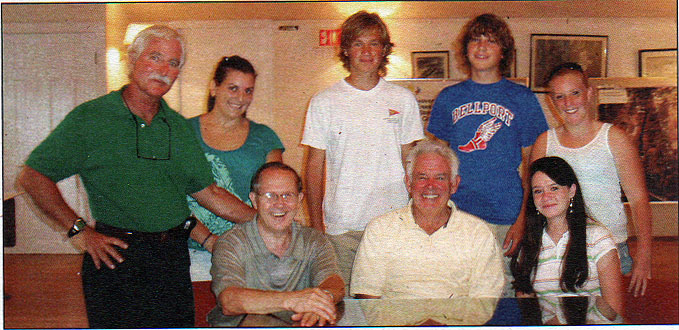
SEQ meets with past advisors, Mr. Loewen and Mr. Cooley, at Post Morrow.